Foundry and furnace dust collectors
Hot gas, sparks, fine metal fume and abrasive sand. Foundries are among the hardest jobs a dust collector can do, so we design them as a complete system.
Where foundry dust comes from
- Melting and pouring. Furnaces give off hot, very fine metal oxide fume.
- Sand plants. Mixing, knock-out and reclamation release large volumes of abrasive sand dust.
- Fettling and finishing. Grinding, cutting and shot blasting castings throw off sparks and metal fines.
Dealing with heat
Gas leaving a furnace can be far hotter than any filter bag can survive. We bring the temperature down before the collector by mixing in ambient air through a dilution damper or by running the gas through a cooling section of duct. Then we choose the bag media for what is left. Coated high-temperature media handles gas above 250 °C. Our boiler collector for a food processing plant runs on gas that hot.
Dealing with sparks
Sparks carried into a baghouse can burn holes in the bags or start a fire. We fit spark arrestors or spark attenuation boxes ahead of the filters, and add temperature sensors so the plant knows if something is wrong.
Toxic fume
Lead and other toxic metal fume must be captured efficiently and handled safely afterwards. For our lead furnace collector in Gauteng we paid as much attention to safe dust discharge and bag changing as to the filtration itself.
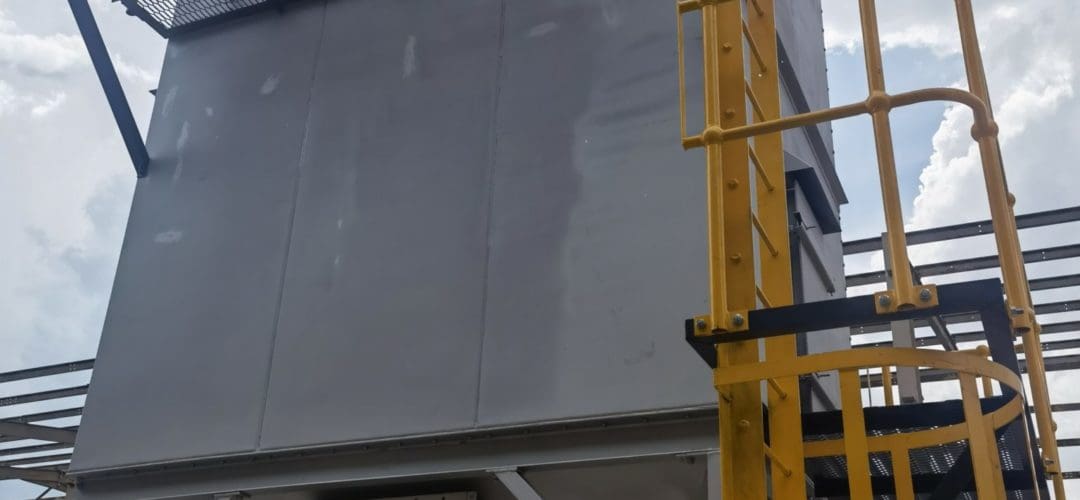
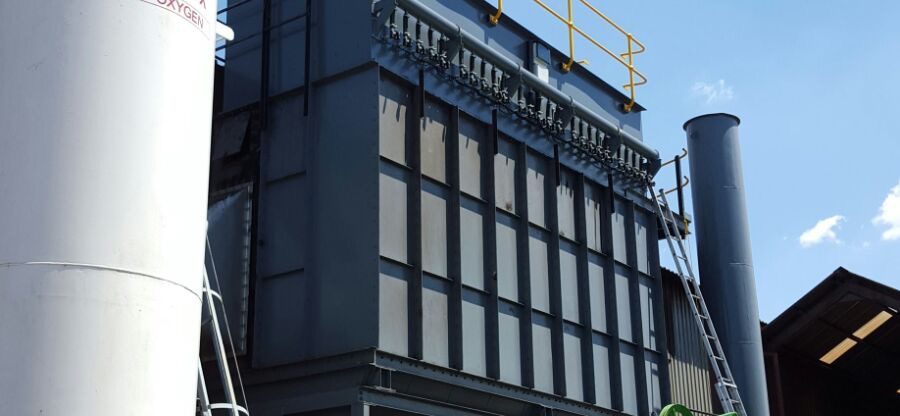
Typical foundry options
- High-temperature bag media.
- Dilution air dampers and gas cooling.
- Spark arrestors ahead of the filters.
- Temperature, pressure and hopper level sensors.
- Wear-resistant inlets for sand plant duty.
FAQ
What bag media suits a furnace?
That depends on the gas temperature at the collector inlet, after any cooling. Aramid, PPS, PTFE and fibreglass media cover temperatures up to about 250 °C. We measure or calculate the inlet temperature before we choose.
Can one collector serve the furnace and the fettling shop?
Sometimes, but hot furnace fume and sparks from grinding often need separate systems or protection. We assess the combined duty on site.
Send us your dust problem
Tell us what you are extracting, roughly how much air, and where the unit will stand. We will come back with a sizing and a quote. A site visit is free in Gauteng.